


Upgrade your Iceland experience.
Go beyond this activity with a bespoke day-by-day itinerary crafted by an Iceland travel planner.
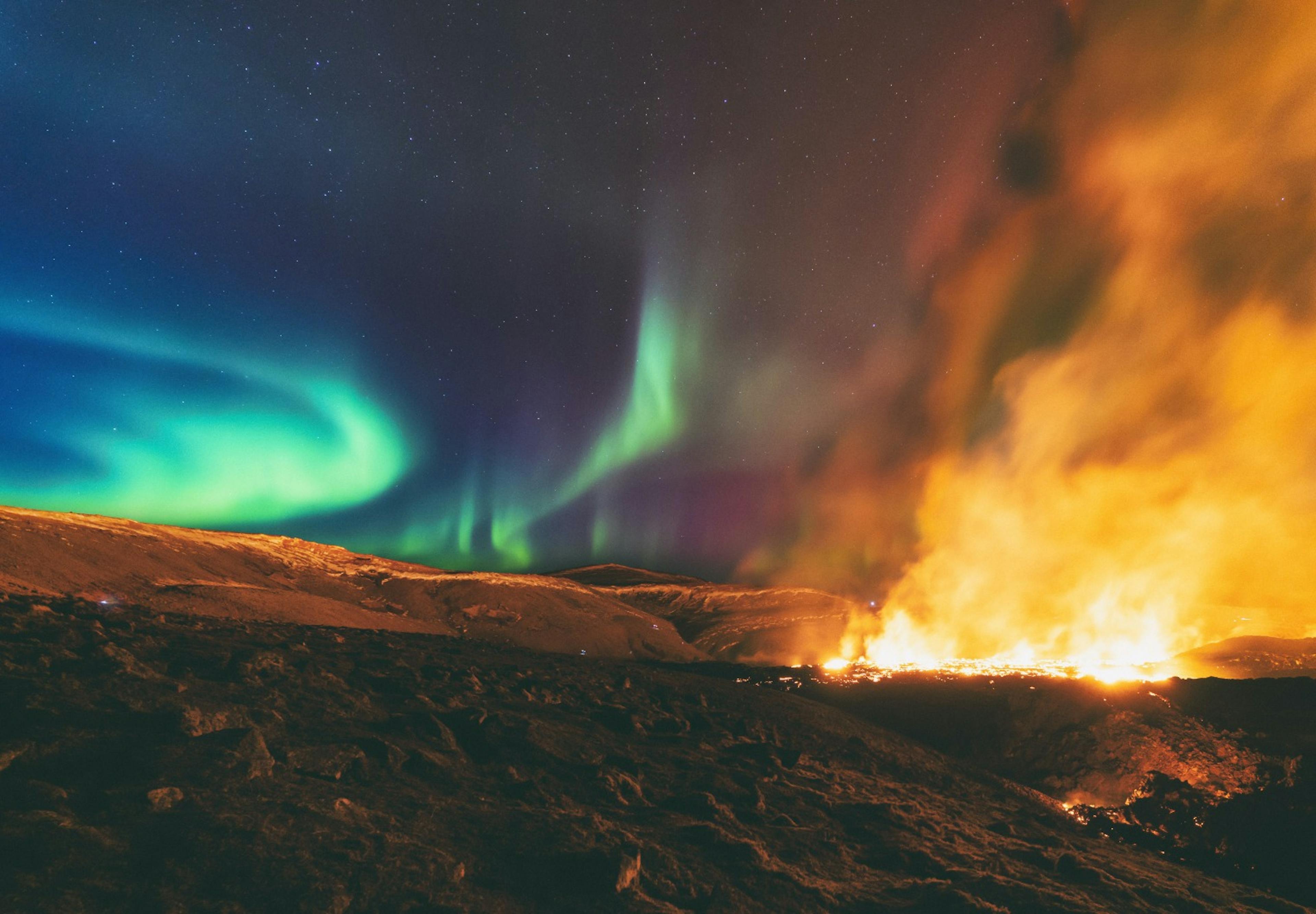
The northern lights are an atmospheric phenomenon that's regarded as the Holy Grail of skywatching. The northern lights, or the aurora borealis, are beautiful dancing ribbons of light that have captivated people for millennia.
6 results
The best time to see the Northern Lights is during the winter, between September and April, when dark and long nights have taken over from the bright summernights in Iceland.
The Northern lights are said to be most active around the equinoxes in September and March, but the chances also improve mid winter by bringing more darkness - it simply gives you a larger window each day to witness them.
The local Icelandic Met Office is the most reliable place to get your weather as well as information Coud Cover and KP Forecast.
If you are staying in Reykjavik and do not want to join a northern lights tour, you can head to the Grotta Island Lighthouse where you can escape a lot of the citys light pollution. It is an approx 10 minute drive from the downtown Reykjavik area. There is parking available. Be mindful with the use of your headlights as people are trying to spot those northern lights.
If you would like to do some of your own exploring, you can head out on a Northern Lights Hunt to the Reykjanes Peninsula. The Reykjanes Lighthouse or Reykjanesviti and Valahnúkamöl are great locations. It is an approx 1 hour drive from Reykjavik These are great locations with no light pollution.
Keep in mind that weather is constantly changing in Iceland. Before heading out always check on the current weather conditions.
Stay alert and safe by utilizing the safe travel app.
Go beyond this activity with a bespoke day-by-day itinerary crafted by an Iceland travel planner.